Car Deer Whistle Installation on My Toyota Corolla: Does It Work?
Car deer whistle installation is one of those small modifications that takes only a few minutes, costs very little and sounds like a good idea — especially if you often drive outside towns where deer, moose and other wildlife can suddenly appear on the road.
I decided to install a small air-powered wildlife warning whistle on my Toyota Corolla. The idea is simple: as the car moves, airflow passes through the whistle and produces a high-pitched sound that is supposed to warn animals before the vehicle reaches them.
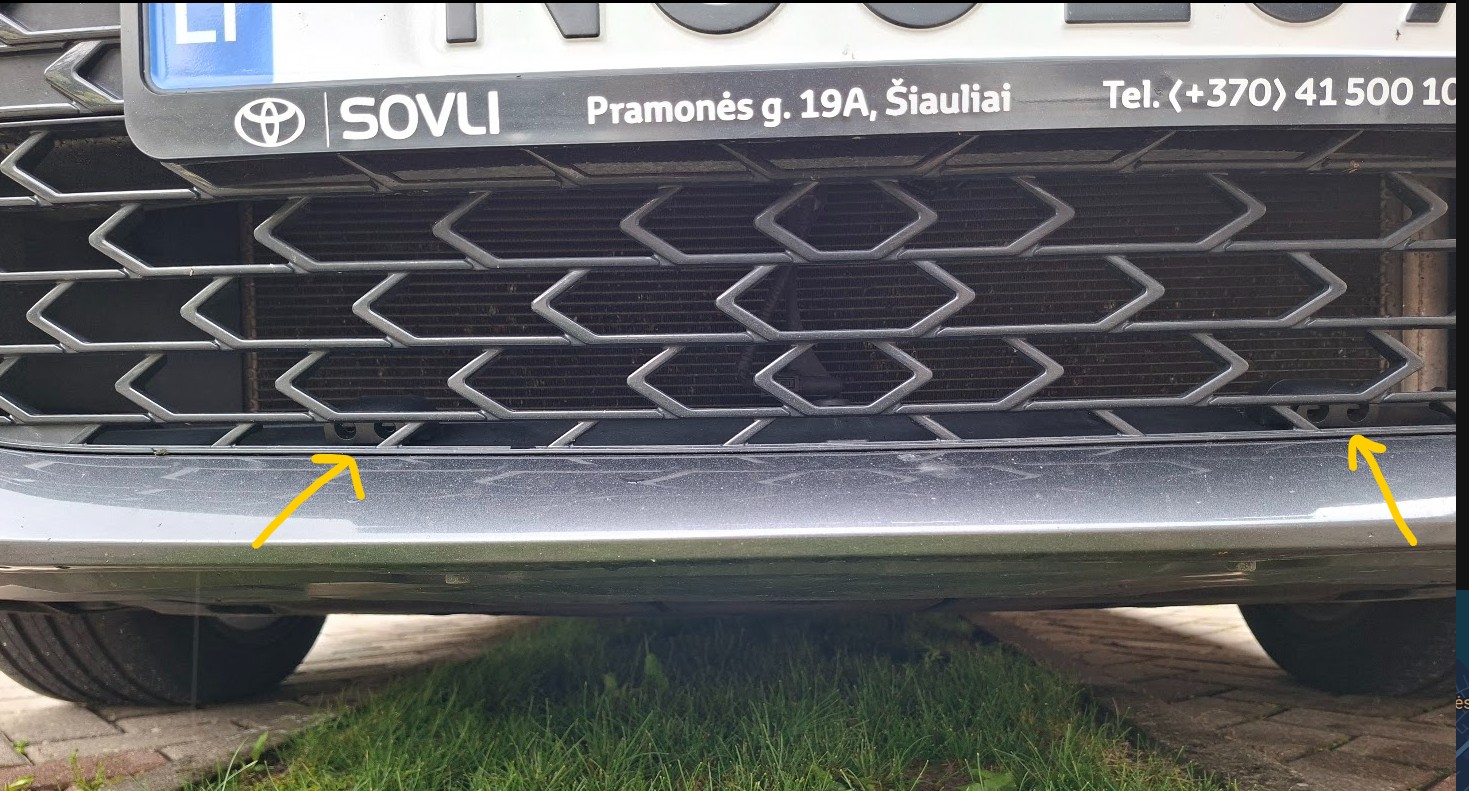
I mounted the whistles behind the lower front grille, where they receive direct airflow but remain almost invisible from the outside. The installation itself was extremely simple.
Of course, there is a much bigger question than how to install one: does a deer whistle actually work?
I cannot safely test that with a real animal, and I certainly cannot claim that the whistle has prevented a collision. What I could test, however, was whether the device actually produces sound when air passes through it. Since I already had an air compressor in the garage, naturally I had to try it. 🙂
In this article I’ll show where I mounted the whistle, how simple the installation was, what it sounds like with compressed air, and why I still keep realistic expectations about whether it can actually prevent wildlife collisions.v
What Is a Car Deer Whistle?
A car deer whistle is a small passive device designed to use airflow created by the moving vehicle to produce a high-frequency sound.
There are no wires, batteries or electronics involved. The whistle is simply mounted somewhere at the front of the vehicle where air can flow through it while driving.
Manufacturers usually market these devices as a way to alert deer and other wildlife before the vehicle gets too close. They are inexpensive, very small and easy to install, which is probably why they have remained popular for so long.
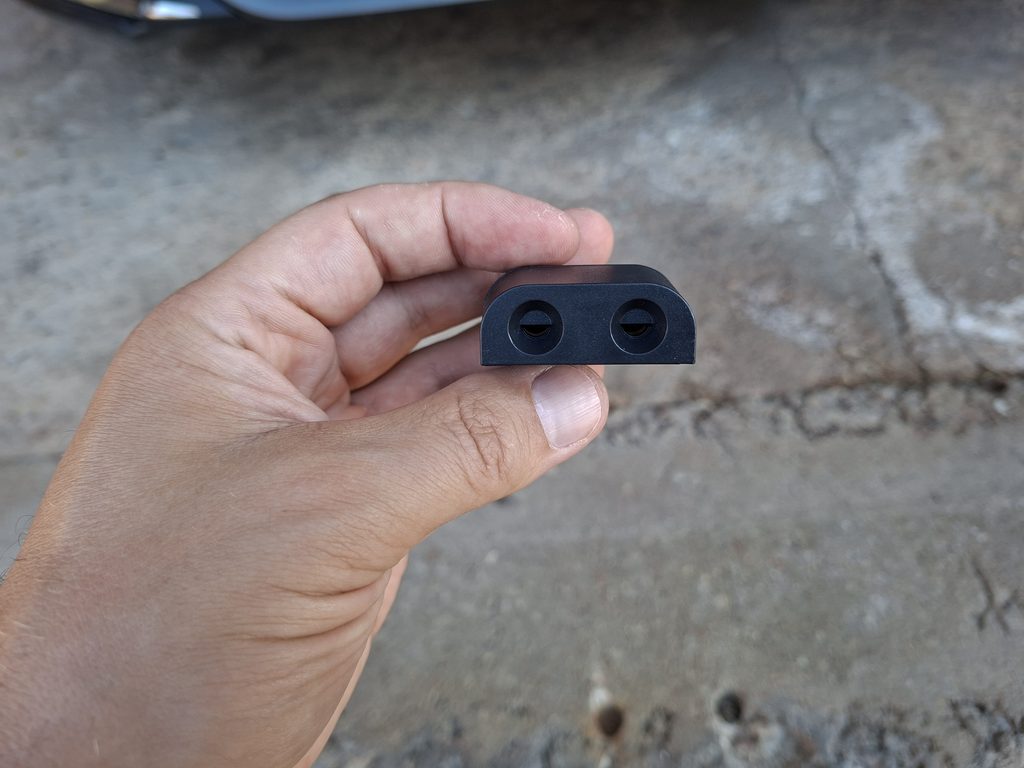
Mine is a compact dual-opening design, small enough to hide behind the front grille of the Corolla.
Where I Mounted It on My Toyota Corolla
I wanted the whistles to receive a direct stream of air while driving, but I also did not want them clearly visible on the front of the car.
The lower grille on my Corolla turned out to be a convenient location. There is plenty of airflow through this area, and the whistles could be mounted behind the grille where they are protected and almost completely hidden from normal view.
I installed them low in the front grille, one toward each side of the car. From the outside you have to look quite closely to notice them, which is exactly what I wanted.
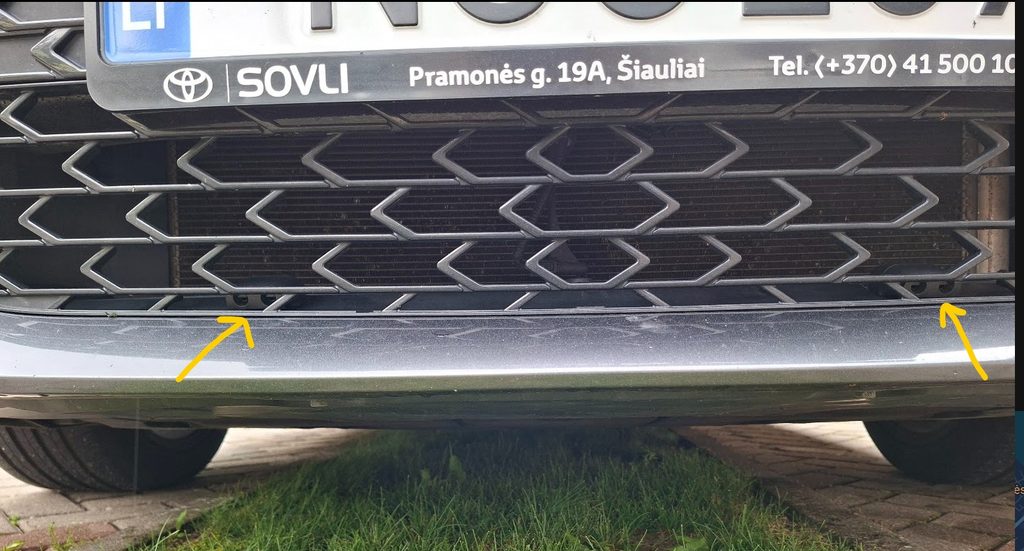
No drilling or complicated modification was required, so the installation was quick and completely reversible.
Installing the Deer Whistles
Installation was about as simple as it gets. Each whistle has a self-adhesive pad on the bottom, covered by a protective film, so there was no drilling, wiring or additional hardware involved.
Before sticking them in place, I cleaned and degreased the mounting surfaces. I used my usual mixture of isopropyl alcohol and distilled water to remove dirt and any oily residue that could reduce the adhesion of the self-adhesive pads.
Once the surface was clean and dry, I removed the protective film from the adhesive pad and pressed each whistle firmly into position behind the lower grille.
The main thing I paid attention to was positioning them where they would receive unobstructed airflow while driving. Since the whistles are small and mounted behind the grille, the finished installation is almost invisible unless you specifically look for them.
I also liked the fact that the installation did not require any permanent modification to the car. No holes, no screws and no wiring — just clean the surface, peel off the backing and stick them in place. For once, a car modification that really does take only a few minutes. 🙂
Does It Actually Make a Sound?
After installing the whistles, I became curious about one very basic question: do they actually produce an audible sound when air passes through them?
Testing this properly on the car is difficult because road noise, wind and the engine would make it hard to hear anything from outside. Since I already had an air compressor in the garage, I decided to do a much simpler test.
I used a compressed-air blow gun to push air through the whistle while recording the result. Obviously, compressed air from a workshop compressor is not the same as airflow around a moving car, so this is not a test of how loud the whistle would be at a particular driving speed. It simply demonstrates that the device does produce a clear whistle when enough air passes through it.
As you can hear in the video, the whistle itself definitely works as an air-powered sound generator. What this test does not tell us is whether the sound is loud enough at normal driving speeds, how far it travels, or whether deer actually respond to it.
In other words, I confirmed that it whistles — proving that it prevents wildlife collisions is a completely different question. 🙂
Do Deer Whistles Actually Work?
This is where things become much less certain.
My compressed-air test confirmed that the whistle itself can produce a clearly audible sound when enough air passes through it. However, producing a sound and actually preventing a wildlife collision are two very different things.
Research into vehicle-mounted deer whistles has generally not found convincing evidence that they reliably change deer behavior or reduce collisions. A review published by the U.S. Federal Highway Administration describes tests in which vehicle-mounted warning devices produced no observable response in groups of free-roaming mule deer. It also notes that road, tire and vehicle noise may mask the sound produced by some whistles before an animal can react to it.
Another interesting point is frequency. Tests of several commercial whistles found that some produced sound around 3.3 kHz while others were closer to 10–12 kHz. The most sensitive hearing range reported for white-tailed deer is roughly 2–6 kHz, so simply advertising a whistle as “ultrasonic” does not automatically mean that it will be especially effective for deer.
So I would definitely not treat a deer whistle as a safety system or rely on it instead of slowing down and watching the road carefully in areas where wildlife is common.
For me, it is better viewed as a very cheap and simple additional precaution. It costs almost nothing, takes only a few minutes to install and clearly produces a sound when air passes through it. Whether a deer standing near the road actually hears that sound early enough — and reacts in a useful way — is something I cannot prove.
I installed mine knowing that limitation. If it provides even a small additional warning to an animal, great. If it does nothing, I have lost only a few minutes of installation time. 🙂
Would I Install Them Again?
Yes, I probably would — but not because I believe a deer whistle is some kind of proven wildlife safety system.
The installation took only a few minutes, required no drilling or wiring, and the whistles are almost invisible behind the lower grille. My compressed-air test also confirmed that the device itself is capable of producing a clear whistle when enough air passes through it.
What I cannot prove is the important part: whether a deer standing near the road will hear that sound early enough, recognize it as a warning and react in a way that actually prevents a collision. The available research does not give me much reason to rely on these devices as a serious safety measure.
So I treat mine as nothing more than an inexpensive additional precaution. I still slow down and pay attention in areas where wildlife is likely to cross the road, exactly as I would if the whistles were not installed.
Would I spend a few minutes installing them again? Yes. Would I trust them to keep a deer out of the road? Definitely not. 🙂