2024 Toyota Corolla Hood Sound Deadening: DIY Install & Before/After Knock Test
One of the things that surprised me when I first bought my 2024 Toyota Corolla Touring Sports was how noticeable the engine could be inside the cabin.
I still remember sitting in the car at the Toyota dealership while the salesman and I were setting up Android Auto and going through some of the vehicle settings. When the engine started, the amount of engine noise reaching the cabin immediately caught my attention. I was not expecting it to be quite that noticeable in a brand-new Corolla.
After sound-deadening the doors and trunk, the hood therefore became another obvious area I wanted to experiment with. My Corolla already came with a factory insulation pad underneath the hood, which is something I know is not always present on some older models, but I wanted to see whether adding vibration damping directly to the metal could reduce some of the hood resonance and perhaps also reduce a little of the engine noise reaching the cabin.
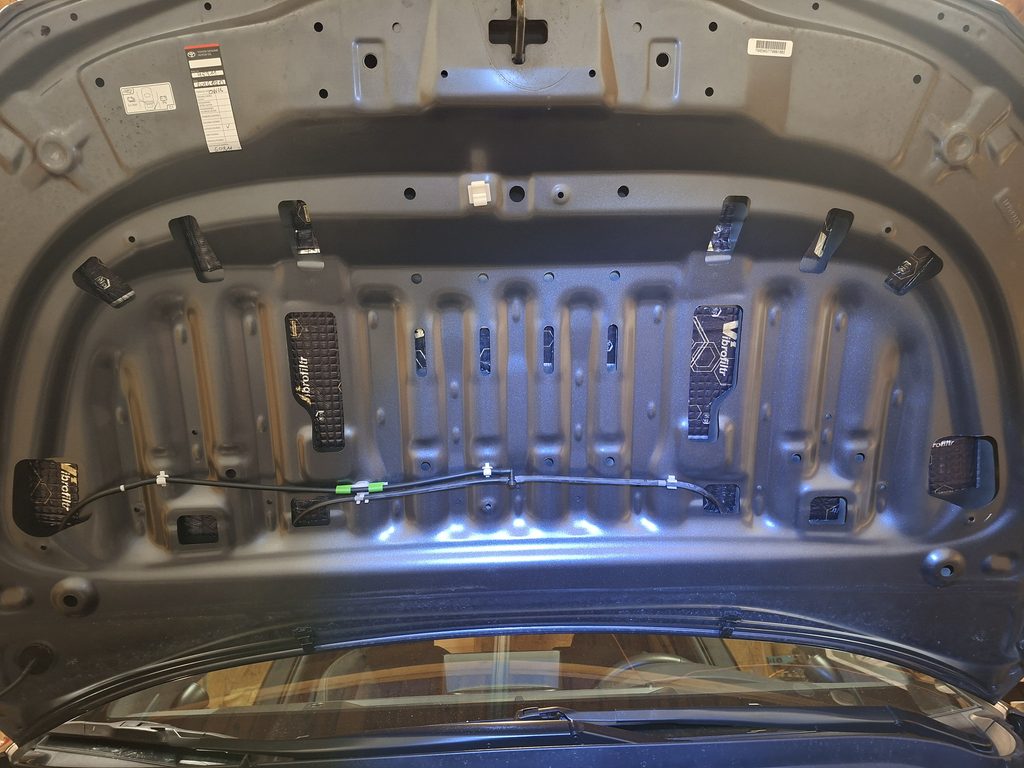
After removing the factory hood liner, however, I discovered one major limitation. I expected to have much better access to the outer hood skin, but most of it is hidden behind the inner metal structure. Only a few narrow openings were available, so I could install relatively small strips of butyl damping material rather than treating large areas of the panel.
The result was not as dramatic as it had been with the doors. Even small pieces of butyl did reduce some of the metallic resonance when knocking on the hood, and the before-and-after test makes that difference slightly noticeable. Inside the cabin, however, it is much harder for me to say whether the engine became noticeably quieter.
Still, because the job was simple, used very little material and required relatively little time, I do not regret doing it. Even if it reduced the engine noise reaching the cabin by only a few percent, I would still consider that a useful result.
Factory Hood Insulation on My Corolla
My Corolla was not completely bare from the factory. It already had a large insulation pad fitted underneath the hood, covering most of the central area above the engine.
I was actually glad to see it there, because some older cars and different trim levels do not always have this type of factory hood liner. Still, since the engine noise inside the cabin had already caught my attention, I wanted to see what was underneath it and whether there was room to add some additional vibration damping.
Removing the factory liner revealed the main limitation of this job. The outer hood skin is largely covered by the stamped inner metal structure, and access to the space between the two layers is limited to a number of relatively narrow openings.
That meant I could not treat the hood in the same way as the doors, where I had much better access to large sections of the outer metal skin. On the hood, I had to work through the available openings and place smaller strips of damping material wherever I could reach.
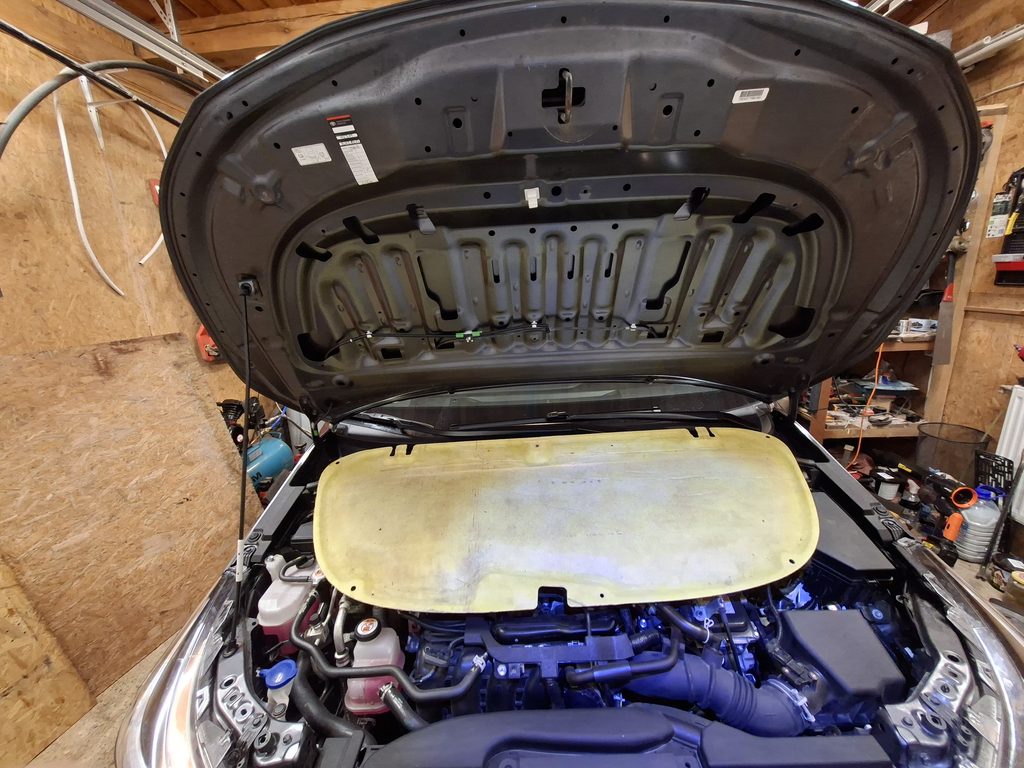
From this point it became obvious that this would be more of a targeted damping job than a full-coverage installation. There simply was not enough direct access to the outer hood skin to do much more.
Materials I Used
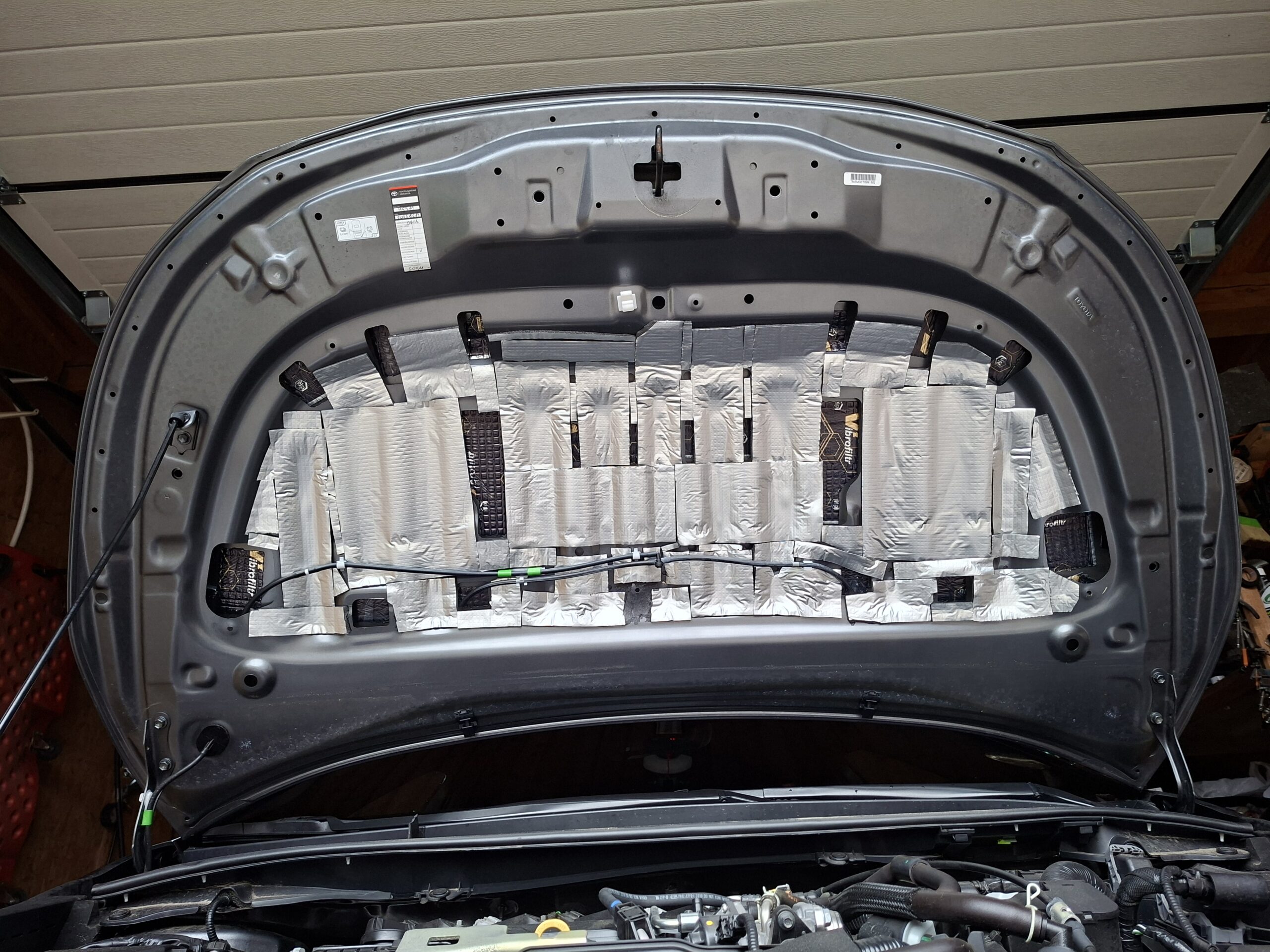
For this project I did not rely only on leftover materials. I also ordered a pack of 5 mm self-adhesive hood insulation panels from Temu that were sold specifically for engine-bay use and marketed as heat-resistant.
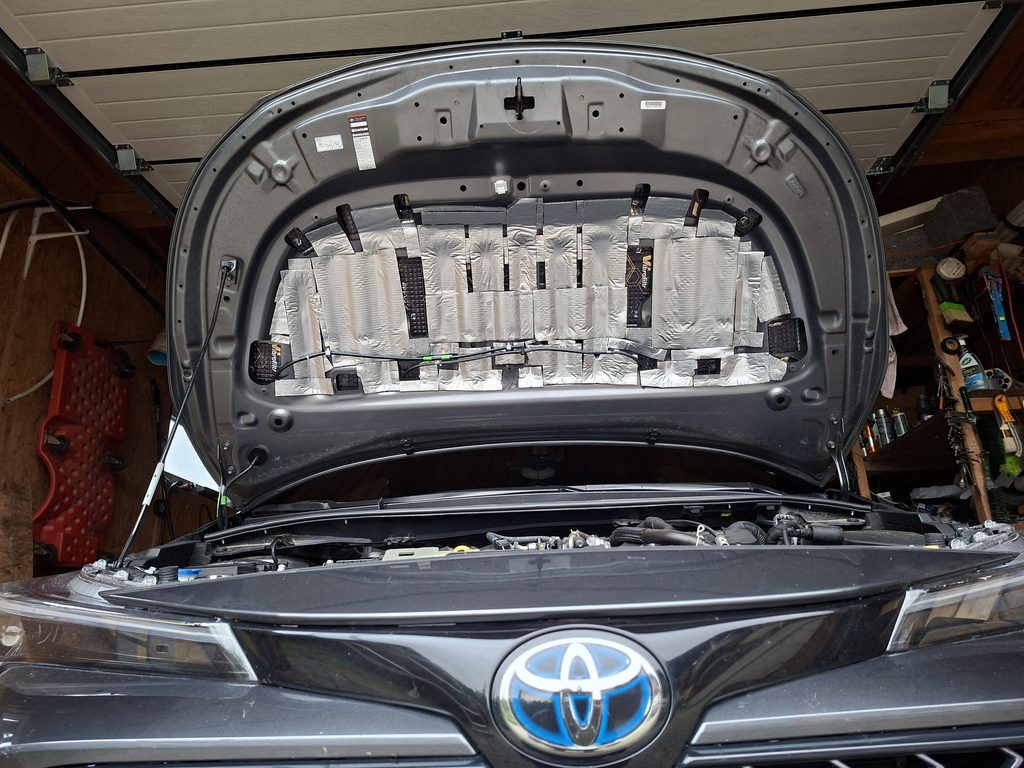
The panels were small enough to cut into strips and feed through the narrow openings in the inner hood structure, which actually made them convenient for this job.
I also used a few small pieces of butyl damping material where I could reach the outer hood skin. The goal of the butyl was mainly to reduce metal resonance, while the additional hood insulation panels were intended to add another thermal and acoustic layer.
After everything was installed, I refitted the original Toyota hood insulation pad over the treated area.
I did not independently test the heat resistance of the Temu material, so I can only say that it was sold for use under the hood.
Before & After Knock Test
Because the effect of vibration damping is much easier to hear than to see, I recorded a simple knock test before and after treating the hood.
This is not a controlled acoustic measurement, but it gives a useful real-world comparison of how the metal panel responds when tapped. Before treatment, the hood had a more metallic ring and continued to resonate slightly after each knock.
After adding the damping strips, the sound became a little shorter and less metallic. The difference is noticeable, although it is much more subtle than the change I heard when sound-deadening the doors.
That makes sense considering how little of the outer hood skin I was actually able to reach. Most of the panel remained inaccessible behind the inner metal structure, so this was always going to be a limited treatment rather than a full damping installation.
Before Sound Deadening
After Sound Deadening
The difference is not dramatic, but I can hear slightly less metallic ringing after the treatment. Considering the limited access and small amount of material used, that is about the level of improvement I expected.
Did It Reduce Engine Noise Inside the Cabin?
This is the part where the result is much harder to judge.
The main reason I started this project was because the engine noise had caught my attention from the very first day I bought the car. I was therefore hoping that adding some extra insulation under the hood might reduce at least part of the engine sound reaching the cabin.
After completing the treatment, however, I cannot honestly say that the cabin suddenly became noticeably quieter. If there was an improvement, it was subtle enough that I could not reliably separate it from normal differences in engine load, road speed and driving conditions.
What I could hear more clearly was the change in the hood itself. The knock test showed slightly less metallic ringing and a shorter resonance after the damping material was installed.
Considering how little of the outer hood skin I was actually able to reach, I was not expecting a dramatic reduction in cabin noise anyway. Even if the additional treatment reduced the amount of engine noise reaching the interior by only a few percent, I would still consider that a useful improvement for such a simple job.
Was It Worth It?
For me, yes — but with realistic expectations.
This was not one of those modifications that completely changed the character of the car. The improvement was much more subtle than the difference I heard after sound-deadening the doors, mainly because access to the outer hood skin was so limited.
Still, the knock test showed that even a relatively small amount of damping material could reduce some of the metallic resonance of the hood. The additional insulation panels were also easy to install, and the original Toyota hood liner could be refitted normally afterwards.
I cannot honestly claim a clear reduction in engine noise inside the cabin, but I also do not regret doing the job. It required little material, did not take very long, and gave me at least a small improvement in hood resonance.
If I had the choice again, I would still do it. Even a small reduction in vibration or engine noise is worthwhile to me when the job is this simple — just do not expect the same dramatic result you can get from treating larger panels such as the doors.
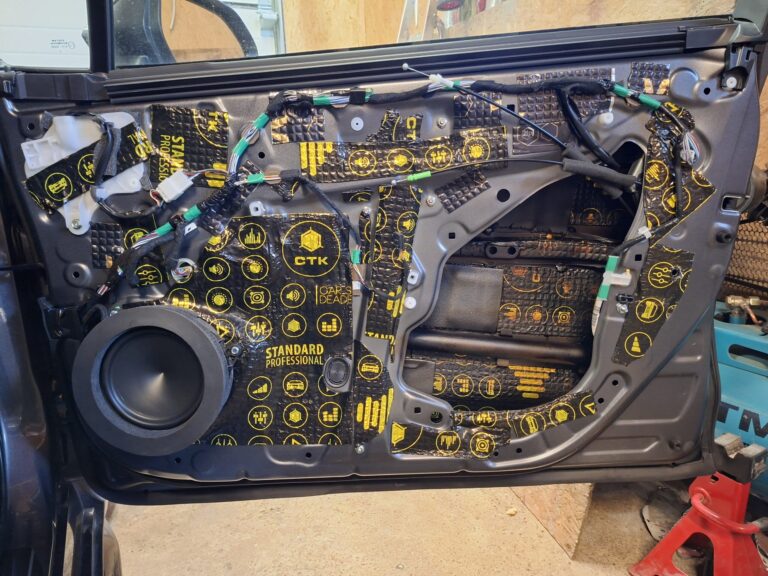
If you want to see a much more noticeable before-and-after result, take a look at my 2024 Toyota Corolla door sound-deadening installation, where the difference in panel resonance was much stronger.