2024 Toyota Corolla Door Sound Deadening: My DIY Install & Before/After Test
One of the first things I noticed after removing the door trim on my 2024 Toyota Corolla Touring Sports was how little factory damping Toyota actually uses. Large areas of the doors are essentially bare sheet metal, and tapping on them makes the panels ring almost like a drum.
The front doors had one small factory damping pad attached to the outer skin. At least Toyota tried. 🙂 The rear doors, however, had no visible damping material at all.
That may be acceptable for basic transportation, but if you care about music, door speaker performance and reducing panel resonance, there is plenty of room for improvement. I decided to treat all four doors with sound-deadening material and add additional foam treatment to the interior door panels.
This is not a laboratory soundproofing test, and I did not measure the result in decibels. Instead, I documented the installation with photos and recorded a simple before-and-after knock test so you can hear the change in panel resonance yourself.
Why I Sound-Deadened the Corolla Doors
My main reason for doing this was the audio system. A door speaker is mounted directly to a large metal structure, so when that sheet metal resonates, some of the speaker’s energy ends up vibrating the door instead of producing clean sound inside the cabin.
The Corolla’s doors are especially noticeable in this respect. With the trim removed, tapping the outer skin produces a hollow, metallic ring. Adding damping material does not turn the door into a perfectly sealed speaker enclosure, but it helps control those large vibrating panels, reduces unwanted resonance and gives the door a much more solid feel.
I also wanted to reduce rattles and vibrations from the door trim itself, so I treated not only the metal parts of the doors but also added foam to the interior door panels where appropriate.
Materials I Used

For this project I used two CTK Standard Door Kits. Each kit is intended for two doors, so two kits were needed to treat all four doors of the Corolla. The main job of the damping material is to add mass and reduce resonance in the large sheet-metal panels of the door. I also used foam treatment on the interior door cards to help reduce plastic vibrations and contact noises.
The front doors received the most attention because they contain the main speakers, while the rear doors were treated using the same basic approach.
Factory Sound Deadening in the Corolla
Once the door trim and access panels were removed, it became clear how little factory damping is used in the Corolla.
On the front doors, I found just one small factory damping pad attached to the outer door skin. Considering the size of the surrounding sheet metal, most of the panel is still completely untreated.
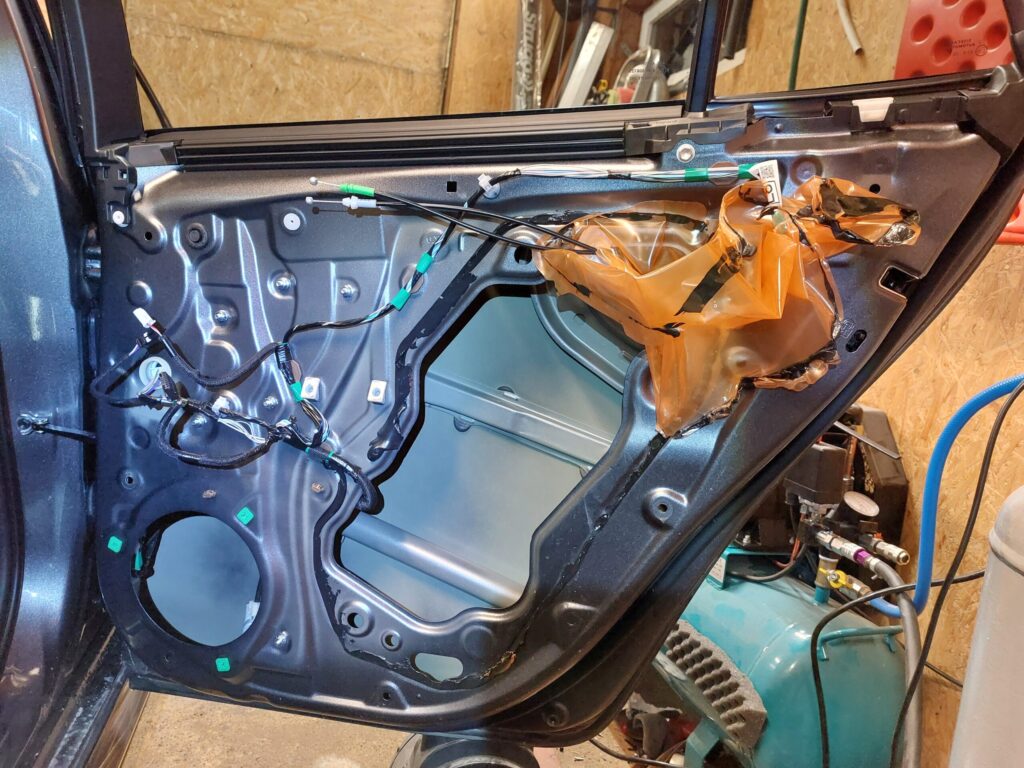
The rear doors were even more basic. On my car, I found no visible factory damping material on the outer skin at all.
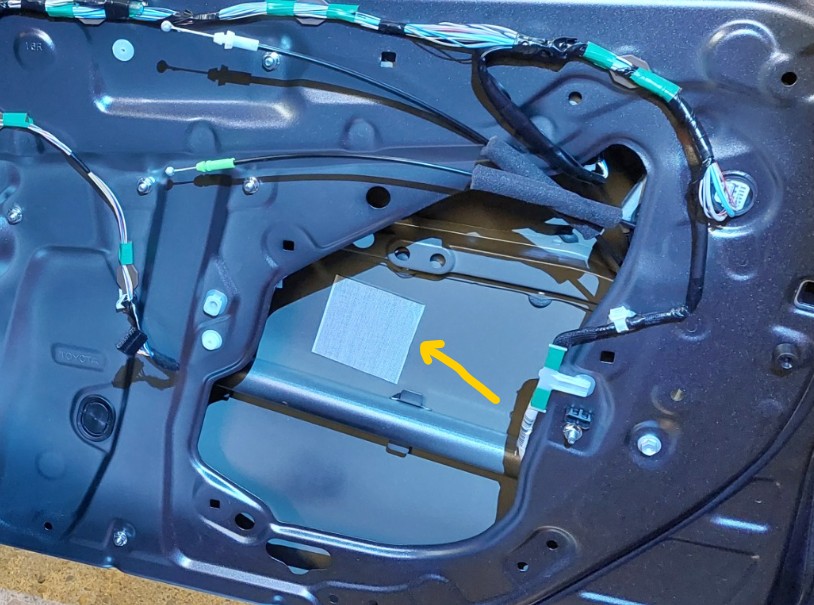
This helps explain the hollow, drum-like sound you hear when tapping on the untreated door panels. There is simply a large area of thin sheet metal free to resonate.
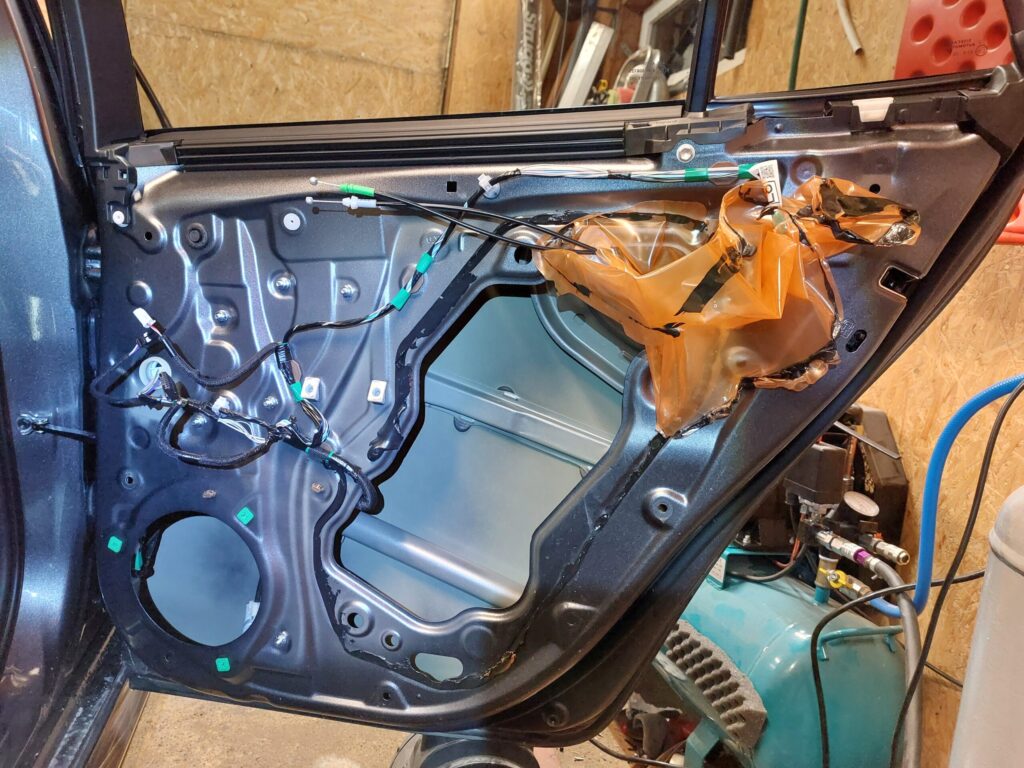
The difference between the front and rear doors is quite interesting: the front at least received one small damping patch, while the rear appears to rely entirely on the bare metal structure.
Sound-Deadening the Front Doors
I started with the front doors. After removing the trim panel and gaining access to the inside of the door, I cleaned the metal surfaces before applying the damping material.
The first priority was the outer door skin — the large sheet-metal panel directly behind the exterior of the door. This is one of the biggest resonating surfaces, so damping it makes a very obvious difference when the panel is tapped.
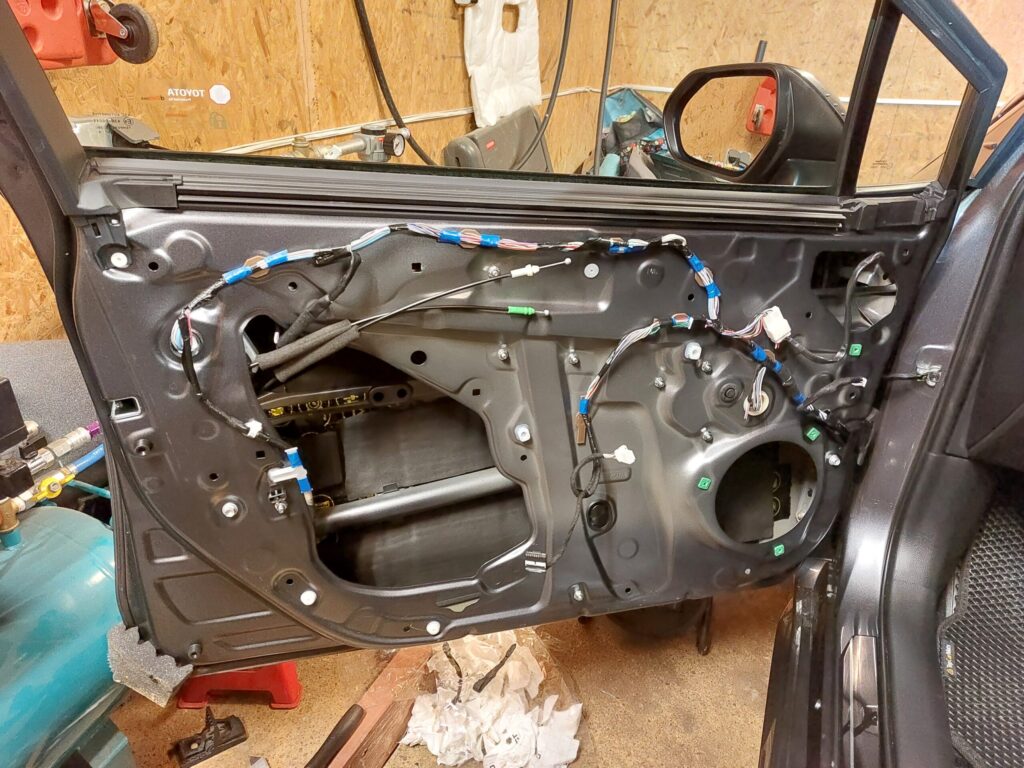
I did not try to cover every square centimetre of metal. The goal was to treat the larger flexible areas that were most likely to resonate, while keeping the window mechanism, wiring, drain paths and other moving parts completely unobstructed.
Treating the Inner Door Structure
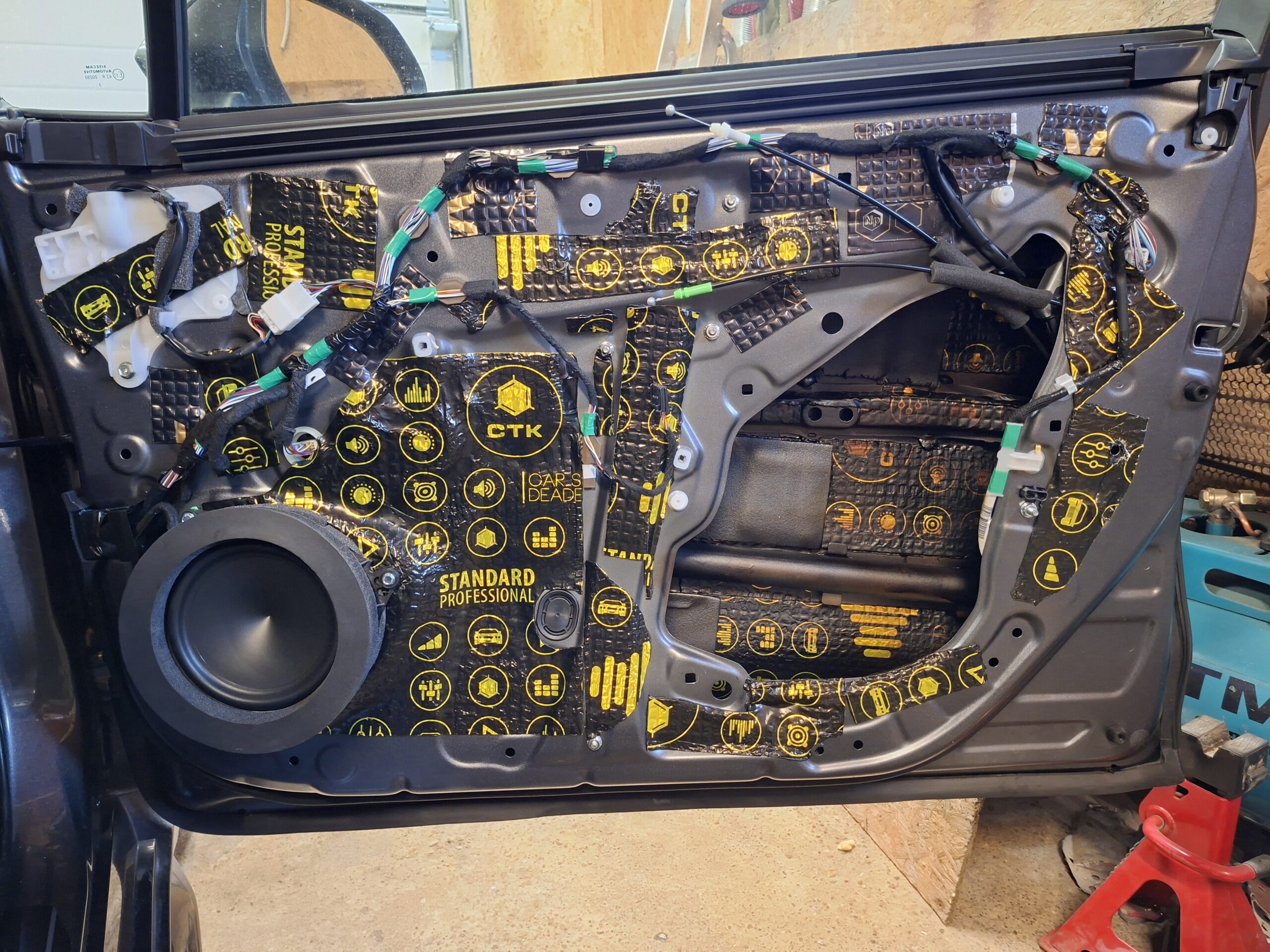
After damping the outer skin, I also applied CTK material to the accessible sections of the inner metal structure. This adds further damping to the door assembly and helps reduce vibration around the speaker mounting area and the larger service openings.
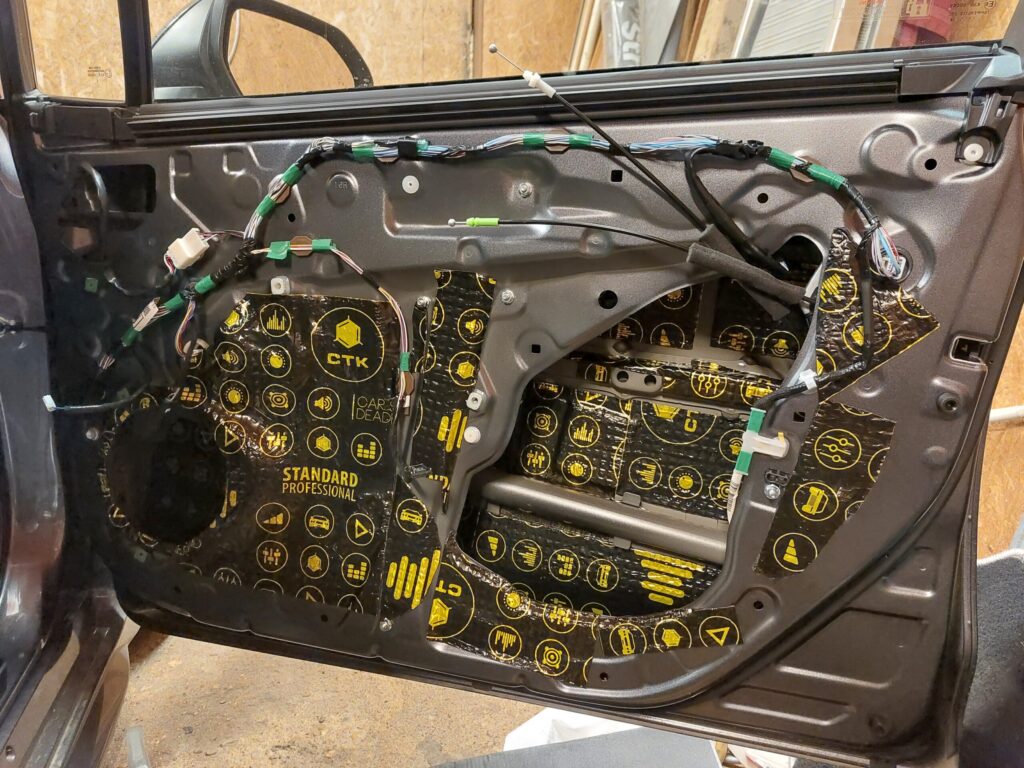
Before reinstalling the front door trim, this is how the finished treatment looked with the damping material in place on both the outer and inner metal sections.
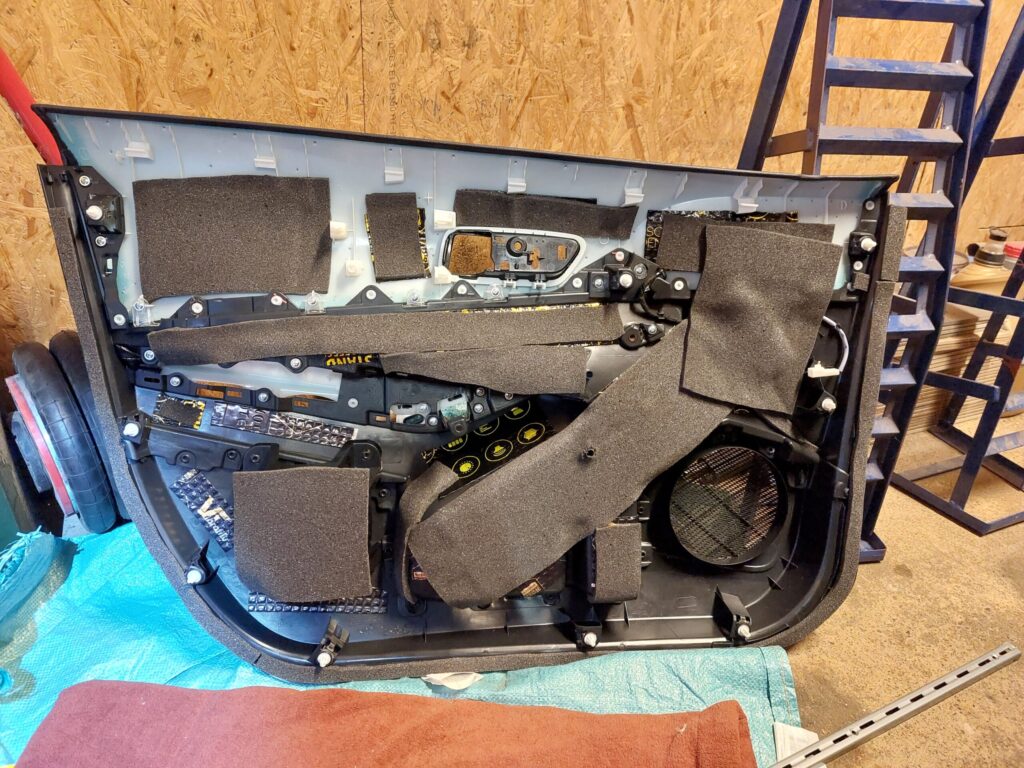
Treating the Door Card
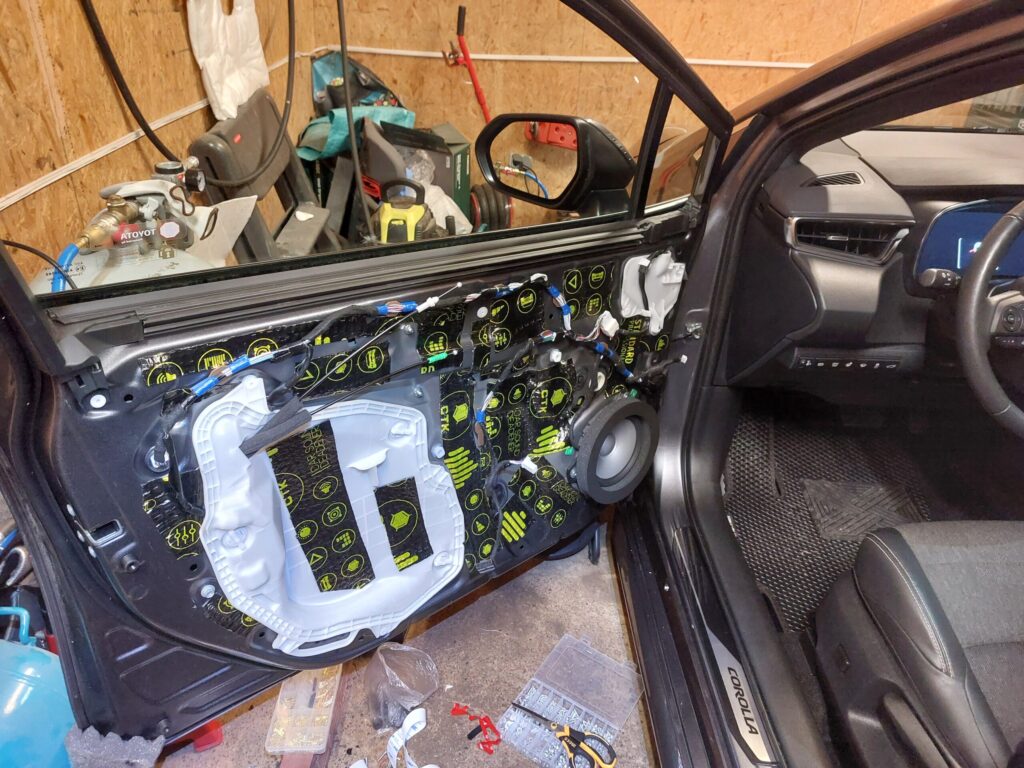
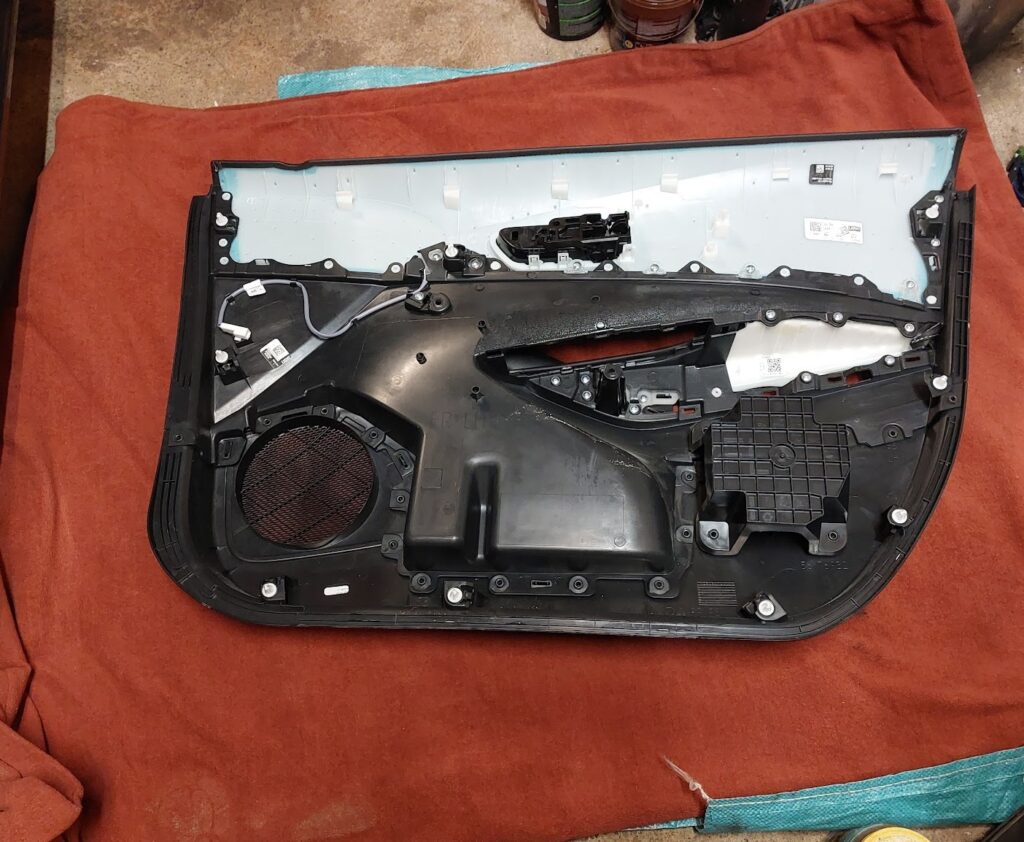
The metal door itself is only part of the problem. The plastic interior trim can also vibrate or make contact noises, especially once the speakers are playing at higher volume.
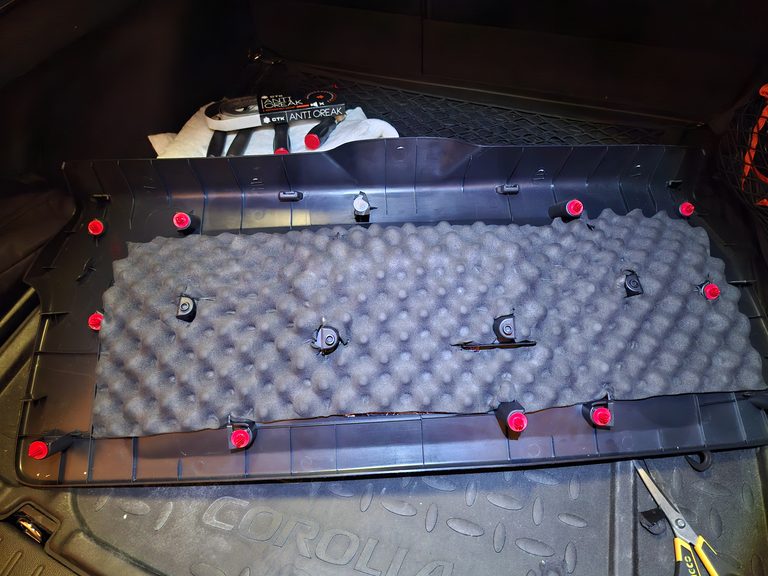
I therefore added foam treatment to the back of the door card, concentrating on larger plastic sections and potential contact points. The idea was not to fill every empty space, but to reduce unwanted movement and prevent hard plastic surfaces from vibrating against each other.
Sound-Deadening the Rear Doors
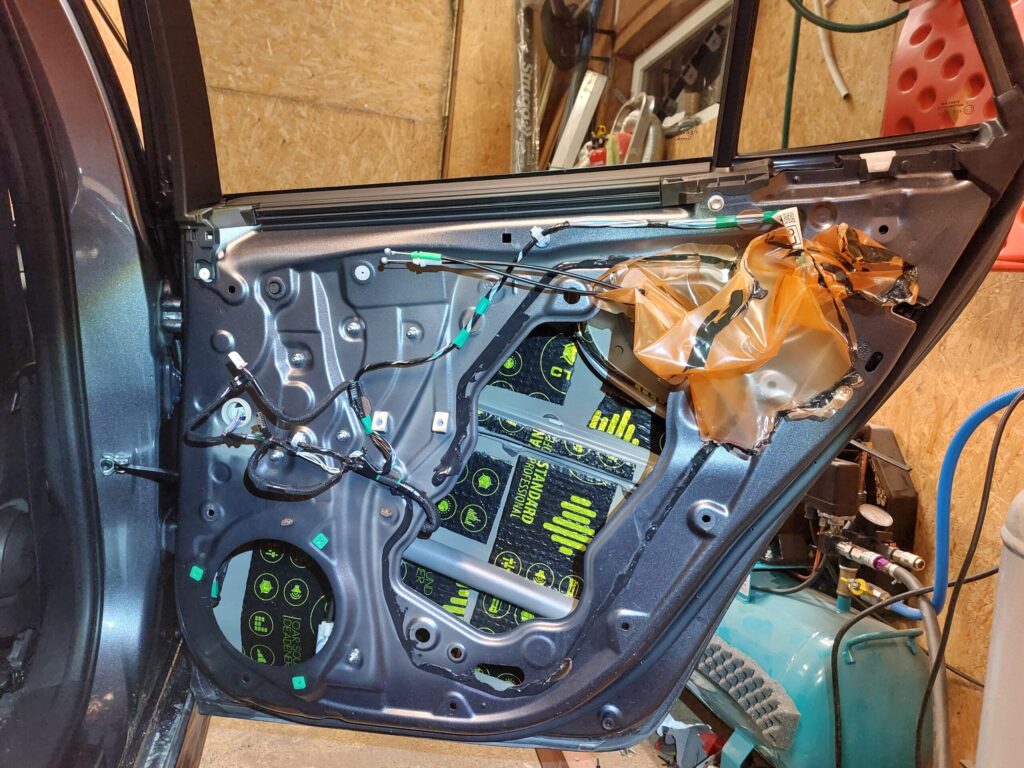
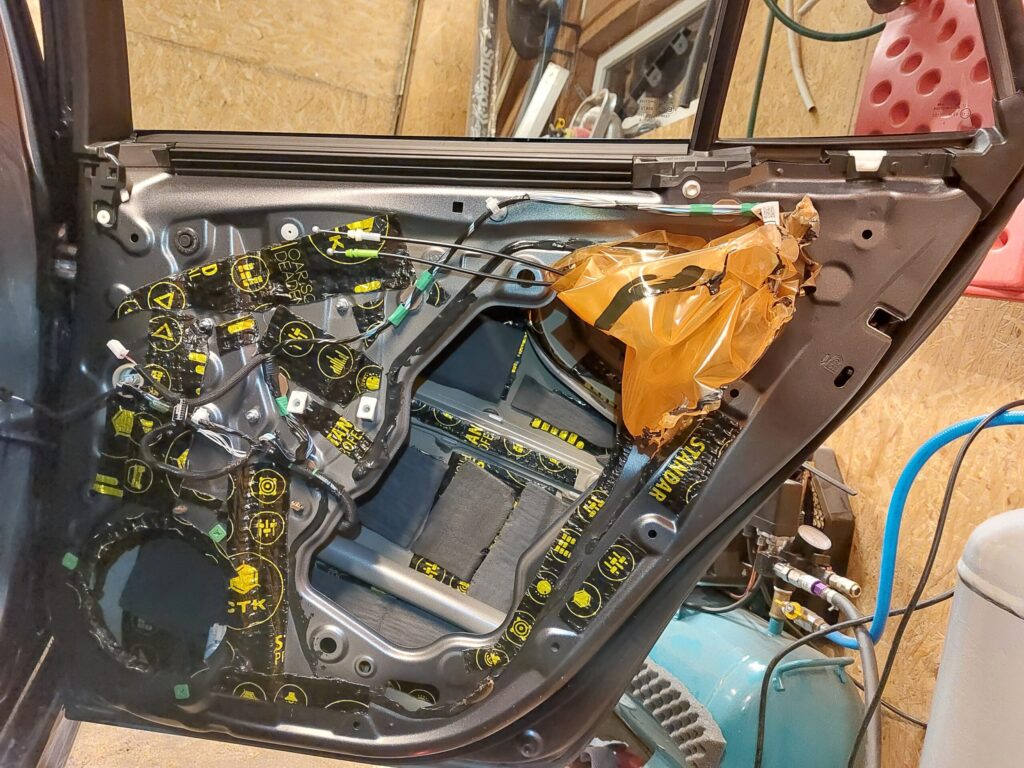
The rear doors were treated using the same basic approach as the front. After removing the trim panel and carefully pulling back the factory moisture barrier, I had access to the bare outer door skin.
I applied CTK damping material to the largest accessible areas of the outer skin, focusing on the flat metal sections most likely to resonate. I then added additional damping to the accessible parts of the inner door structure while keeping the window mechanism, cables and drainage areas clear.
Once the damping treatment was finished, the factory moisture barrier was returned to its original position before the door trim was reinstalled.
Alt:
Before & After Knock Test
The difference is easiest to hear in the knock test. Before treatment, the door has a hollow, metallic ring and continues to resonate after each tap.
After the damping material was installed, the same type of knock produces a much shorter, duller sound. The panel feels noticeably more controlled and no longer behaves like a thin metal drum.
This test is not a substitute for proper acoustic measurements, but it gives a very clear real-world indication of how much the panel resonance changed.
Was It Worth It?
For me, yes — absolutely.
I had already done a similar sound-deadening treatment on my 2011 Kia Ceed, and even with the original OEM speakers the improvement was easy to hear. The speakers sounded cleaner and more controlled once the doors stopped resonating as much.
Because of that experience, when I bought the Corolla and saw how little factory damping Toyota had used, I already knew this was one of the first upgrades I wanted to make.
I have not regretted it. The speakers now sound noticeably better, especially at higher volume, and the door panels no longer add the same unwanted noises to the music. Before the treatment, stronger low-frequency bass could even make parts of the door trim rattle. After damping the metal and treating the door cards, those rattles were gone.
If you care about sound quality — even if you are still using the factory speakers — door sound deadening is one of the upgrades I would consider doing before spending money on more expensive speakers.
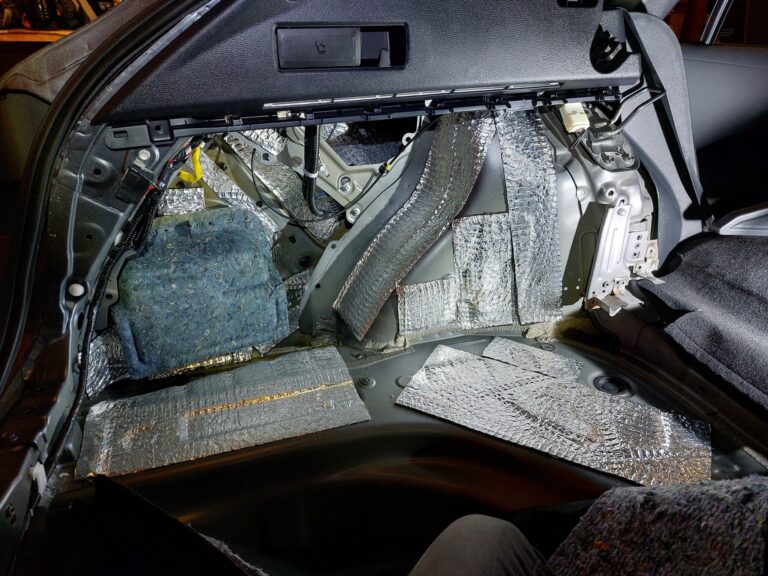
I also treated the rear of the car — see my Toyota Corolla trunk sound-deadening installation, including the spare wheel well and rear wheel arches.